Blogs
The stickiness of desire
Last year we completed the pilot offering of the project's wheel of consent module. Of many unexpected byproducts of that for me was the (now obvious) conclusion that consent and desire are fundamentally interwoven. Person A: desires, person B: consents, and vice versa.
But there is more, lots more. This piece attempts to survey some of the many nuances of desire.
The old fashioned idea of needs
First, what is the difference between need and want? NVC gave us the term 'needs'. Rosenberg considered that every human has a common set of things that we need in order to survive and thrive. There is a list of these abstract needs in his book, including things like: autonomy, respect, meaning, community etc. Its a very Maslow-esque narrative, after all, the two psychologists were probably peers in their day.
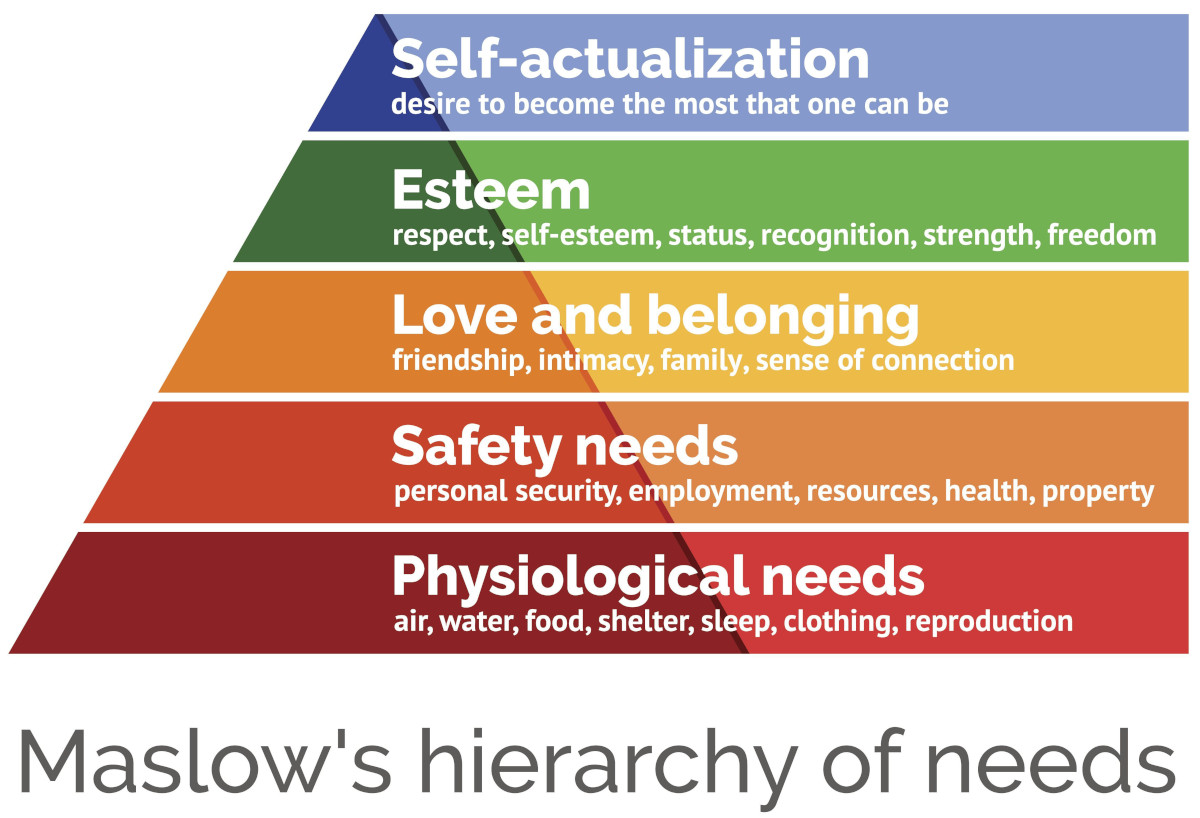
Rosenberg said, correctly in my opinion, that my feelings tell me about what it is that i need. If i am hungry, my body is telling me that i need to eat something. But, of course i am not going to die if i do not find food today. I might decide to fast, and so my imperative to rest my gut is stronger than my imperative to eat. Lets try replacing the word need with want. While i do want food, actually i want to detox more. This tells us that 'needs' are not as absolute as Rosenberg conceived, and instead are at least somewhat negotiable.
Lets take one of the most pressing of our biological imperatives, oxygen. Our need for oxygen is quite a bit less negotiable, that's a given. From this, we see that a biological principle exists where each species inherits a set of environmental expectations. Emotion is this genetic legacy telling us which things we should seek, or be repelled by, if we want to align with the evolutionary momentum of our kind.
So, on one hand these imperatives are absolute in the sense that their associated feelings will be an inescapable consequence of choosing to frustrate those imperatives.
Here's an example. We are mammals, and mammals evolved to live in groups. This was actually rather unusual when compared to our reptile predecessors. But the need to belong, is not some cosmic law of the universe, that every single species must adhere to. Not at all.
But, when we accidentally or otherwise become isolated, we will feel lonely. Thats our biology telling us to connect, to rejoin the herd. But, many religious traditions include the idea of protracted solitary retreats, of monks mediating alone for decades in caves in the Himalayas.
So that's the lens with which i inquire here about need verse want. I am not saying we do or don't need to belong, just that there is a biological expectation, or presumption that we seek out and maintain community, the frustration of which will result in certain feelings, and that we have some choice whether to act on those feelings or not. Which may or may not have health consequences.
Wants and desires
The other side of this, is therefore that we could say that in order to evolve, we actually have to creatively adapt, depart from, bend, or even deny some of these legacy imperatives, or needs'
For reasons that were never explained to me, AR seems to prefer the terms want and desire. Some of the above is possibly why, especially given the Integral Theory roots of the Boulder school.
In any case, the words want and desire, seem to imply an element of choice. Creative choice. Conscious choice.
Choice is something adults have. Infant humans can not self-regulate, and are profoundly dependent on their mother to feed them and keep them clean and warm. Infants are fundamentally without capacity to choose, negotiate or diversify. In this sense an immature human arguably has a much stronger claim to the word need.
Adult humans, in attempting to satisfy wants or needs can choose among multiple other people. They can cognitively reason, in order to prioritise and trade off needs against each other.
Ok, so I will concede that 'want' has some historical baggage, of being frivolous. I want a million dollars. I want a Ferrari. I want a perfect body. Equally, desire has some interesting (and sticky) reproductive connotations. But all that aside, to my mind, they just seem to be better terms.
The word desire has an additional benefit, it can be used as both a verb and noun. "I need, my need is". "I desire, my desire is". 'Want' does not have an equivalent form. Perhaps that's part of its raison d'etre in the AR lexicon.
Dialing down obligation
Now when it comes to desire being sticky, (oh my gosh, how did we end up at honey) we must look at the attachment to outcome.
We already talked about removing the question mark from the request. By converting our request into the form of a reveal statement, eg replace "Will you...?" with "I would love you to..."
It became clear that a) the question form is a politically correct derivative of the historical directive form, from the bygone era of feudal hierarchies. And b) that the messiness of desire relates almost entirely to the degree with which a sense of obligation is embedded, or in any way hinted at.
A person with a healthy capacity to desire, will likely be pretty committed to finding a way to satisfy that desire. But there are many ways to meet a given desire, and many other people that can support me in order to meet it. So as mature adult communicators, if person A for whatever reason does not have the capacity or will to help me fulfil my desire, then i can go ahead and ask any one of the other 9 billion people on the planet. Honor self and honor other.
So to the extent that a request contains any residual expectation of compliance, i am behaving more like a child than an adult. Why, because a child can quite reasonably expect its caregiver to meet its needs. So part of completing the journey of maturation involves transitioning from need to want.
One last thing to ponder about desire is that it seems much more ephemeral. What i desire now, might be totally different in 5 mins time. That means being light on our feet while we practice.
Legacy narratives
AR is sometimes conceived of as a Hero's journey. We step out of our communities of origin. We embark on a journey of soul searching to look at how we were taught to communicate, ways that were programmed into us by our family and society, and decide which parts to keep, which parts we want to throw out. We find out who we are and who we want to become. We define our aspirations and values. We figure out what we want.
Now for anyone who asks the question: what do i want, in earnest, will highly likely encounter old narratives. Back when we were teaching NVC, (in a life before AR), when explaining the NVC idea of needs to a group of educated progressive adults, it was pretty much guaranteed that we would stir up a whole bunch of dysregulation. Protests ranging from that's selfish, to I am a parent and i'm sorry but my needs come last. A room full of long faces all around.
This is, in hindsight, to be expected given the way we were educated. Few last gen parents understood that infants have important, predictable attachment needs, and parents unintentional neglect of those needs readily installs some pretty harsh life lessons into the psyches of the young. As a result here is some of the 'truths' that were possibly programmed into our nervous system:
- I am not allowed to want
- It's pointless to want, because it never worked before
- I shouldn't burden others, or they might leave
- Their needs are more important than mine
- Asking for what i want will only result in painful disappointment
- Protesting unmet needs will result in further punishment
- I should be independent
- I should be more evolved than this
- Things are scarce
The moral of the story, is, to whenever we attempt to construct a desire statement, we might want to keep an eye out for these legacy narratives resurfacing. They are deeply deeply ingrained. Anything we learned in the first 6 months of life, is almost impossible to unlearn. If there's a way, the evidence supports a view that it involves vast repetition of structured, regulated practice. Sound familiar?
While this does not require fixing per se, it does hurt to touch these old messages. And touch them we will, whenever we try to relate in any meaningful way. What we can do is just try to notice when these feelings and stories bubble to the surface. Naming it out loud helps, and finding a way to sit with the pain, rather than brush it aside, or stuff it down.
Quirks of language
So far we have removed the directive (and the question mark) from the request. We have merged needs and requests into a single unified axiom: express desire without attachment. We reimagined desire as a more fluid sense of whats alive right now, rather than needing any kind of justification or permanence. And we are keeping an eye out for legacy narratives.
To wrap up i see a few last interesting quirks of language:
- "I want...", is very clean, but can sounds clunky, or overly direct (like a 2 year old having a tantrum).
- "I love the way you..." and "what i would love..." seem like a matched pair of reveals, one for appreciation, one for a request. No surprise that the word love permeates our language as we walk a path of (re)connection, even if it takes a bit of getting used to, using it outside of romantic settings.
- "I'd love it if you could say..." verses "i'd love to hear..." 11% less obligation?
- In AR we often say "i would love it if..." but which linguistically contains a bit of a tense muddle. How do i know what i will love in the future? A cleaner syntax, also in common use in AR is "i long for..." / "i am drawn to..." 11% more present, 11% less obligation.
- "What i love is to...". / "I love doing X... I'm curious if thats something you'd like to explore with me." 11% less obligation, 11% more reveal, with little loss of meaning?
- "I love / like...", not as appreciation but as an under utilised way of revealing desire.
That's it, my desire to write is now satisfied.
Note that views expressed in blogs do not necessarity reflect the views of the Project. They are the blog authors version of truth.

